Research in Physical AI, Multimodal Sensing & Wireless Systems

Selected projects, organized by theme. Each project has its own page; select a box in the PHY-layer and earlier research sections to expand it here.

AI and Systems for Physical AI 2025 – present

Physical AI requires models that can interpret multimodal sensor data and systems that can deliver that data and act on the result in real time. These projects address both.

RoboNEST: Robotics Networked Edge Systems Testbed for Physical AI
2025 – present Demo · ACM MobiCom 2026 with Ushasi Ghosh and Dinesh Bharadia
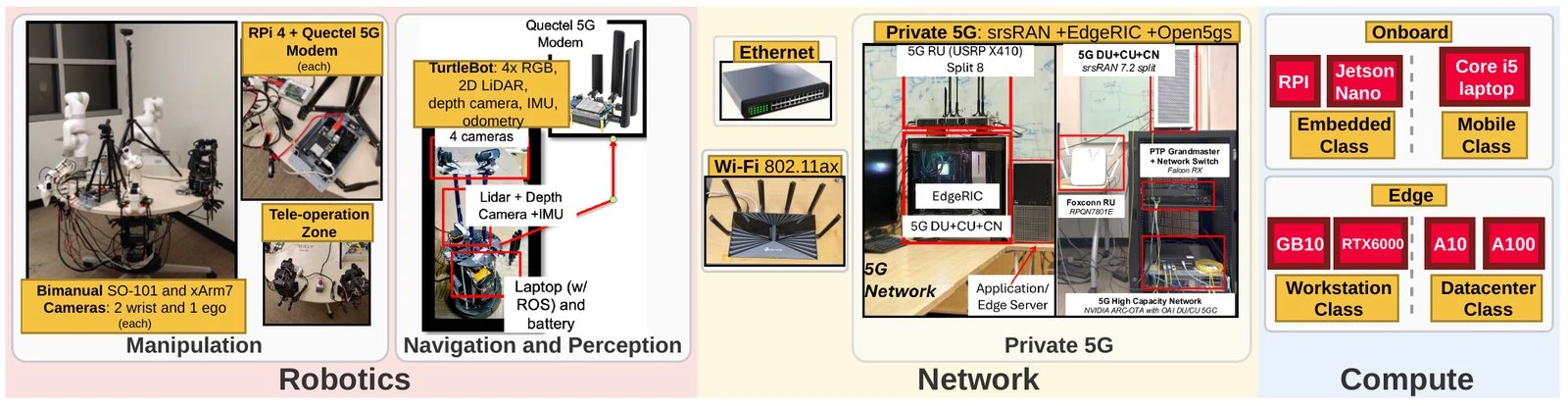
RoboNEST testbed: robot arms and a TurtleBot, Ethernet, Wi-Fi and private 5G access networks, and edge GPU compute

RoboNEST is an end-to-end testbed that brings real robots, interchangeable access networks, and edge GPUs into one instrumented platform, making the complete sensing-to-action path of a Physical AI task observable and controllable. Two xArm7 arms, SO-101 leader-follower arms, and a TurtleBot stream camera, LiDAR, depth, and IMU data to the edge over Ethernet, Wi-Fi 6, or a private 5G network running EdgeRIC. Vision-language-action (VLA) policies run there on GPUs ranging from A10s to an RTX 6000 and a GB10. Clock-synchronized logging correlates application events with RAN state, modem diagnostics, and GPU inference. On a 1080p manipulation task over 5G, moving the policy from an A10 to an RTX 6000 reduces glass-to-action latency from 179 ms to 111 ms; on the same GPU, Wi-Fi and Ethernet reach 77 ms and 68 ms.
LLMs for RF and Vision Multimodal Sensing

Jun – Sep 2026 Research Internship · Qualcomm

Developed a rigorous framework to study large language models on RF and vision based multimodal sensing tasks. The framework identifies and isolates failures to gaps in domain knowledge, domain reasoning, or domain-specific data interpretation, and prescribes targeted fine-tuning remedies.

P2SIF: Plug-n-Play Sensor Integration Framework

with Pushkal Mishra and Dinesh Bharadia
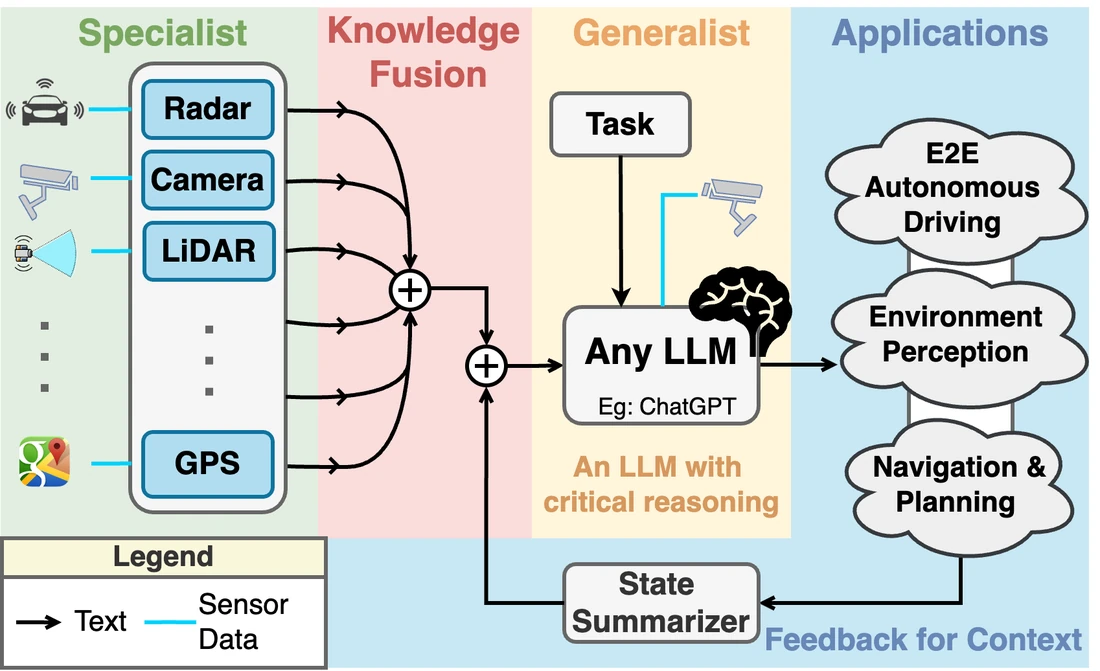
P2SIF architecture: specialist models for radar, camera, LiDAR, and GPS feed a knowledge-fusion stage and a generalist LLM

General-purpose LLMs reason effectively but cannot interpret raw LiDAR or radar data; in our tests, frontier models reported vehicles in scenes that contained none. Fine-tuning and adapter layers address this only by tying each sensor to one model’s weights. P2SIF is a decoupled architecture that integrates new modalities into existing LLMs without modifying their weights. Specialist models convert each sensor stream (camera, LiDAR, radar, GPS) into concise text reports, a knowledge-fusion stage merges them, and an unmodified generalist LLM makes the decision. New sensors can be added without retraining, the LLM can be replaced independently, and each decision leaves a human-readable trail for failure attribution. The target applications are autonomous-driving tasks in CARLA and on real LiDAR, radar, and camera data, including fog and night driving.

mmsRAN: Multimodal Cellular Uplink for Physical AI

2025 – present Qualcomm Innovation Fellowship 2026WiP · ACM MobiCom 2026 with Ushasi Ghosh, Srinivas Shakkottai, and Dinesh Bharadia
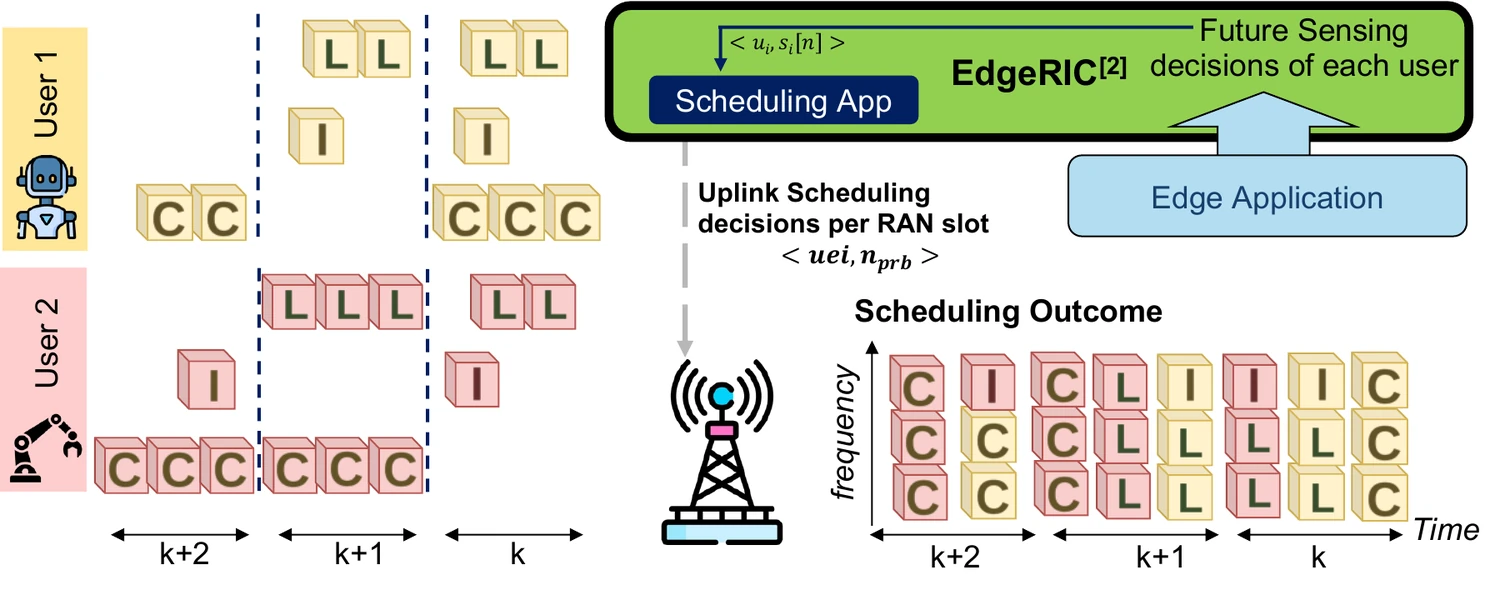
mmsRAN scheduling loop: the edge application shares future sensing decisions and an EdgeRIC app schedules each user's sensor streams per RAN slot

A robot’s control loop operates in discrete timesteps, and the edge application can act only once every sensor stream for a timestep has arrived. Over the cellular uplink, these streams arrive skewed, both across one robot’s sensors and across robots sharing a cell; in our multi-user measurements, skew alone adds approximately 13 ms of latency. mmsRAN is an uplink scheduler for multimodal sensor flows that must be low latency, synchronized, and delivered in lock-step. Each sensor modality receives its own QoS flow and data radio bearer, and a scheduler running on EdgeRIC allocates uplink resources per slot so that a timestep’s streams arrive together. In early over-the-air results on our 5G testbed, network tuning reduced median sensor-frame latency from 30.4 ms to 18.9 ms, and bearer-level prioritization roughly halved the latency of a high-priority stream without starving the others.

PAIQoO: Quantifying the Network Requirements of Physical AI

2025 – present In progress
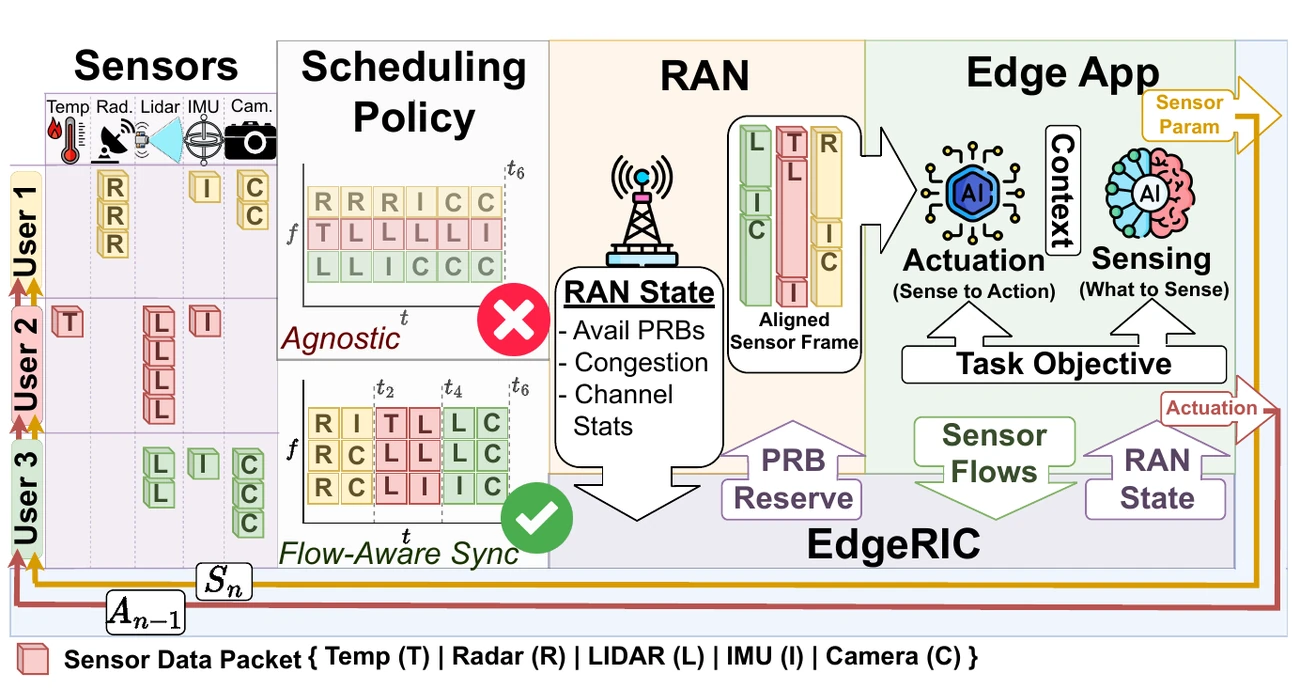
Multimodal sensor fusion at the edge: per-user sensor flows, flow-aware scheduling in the RAN, and a sensing model at the edge application

PAIQoO quantifies the network requirements of Physical AI applications by characterizing how sensor fidelity, end-to-end latency, and radio conditions jointly determine task performance. Higher-fidelity sensing improves performance only until the additional data begins to delay the action, and a slightly sub-optimal action executed on time often outperforms a better action that arrives late. The goal is to translate task-level requirements into concrete network requirements, so that a network-aware sensing model can select what to sense, and at what fidelity, as conditions change.

PHY-Layer Spectrum Intelligence 2022 – 2026

Earlier work in wireless systems, covering platforms, datasets, and learning methods for understanding activity in the radio spectrum. Much of this work was carried out with the Signals Lab at UC San Diego.

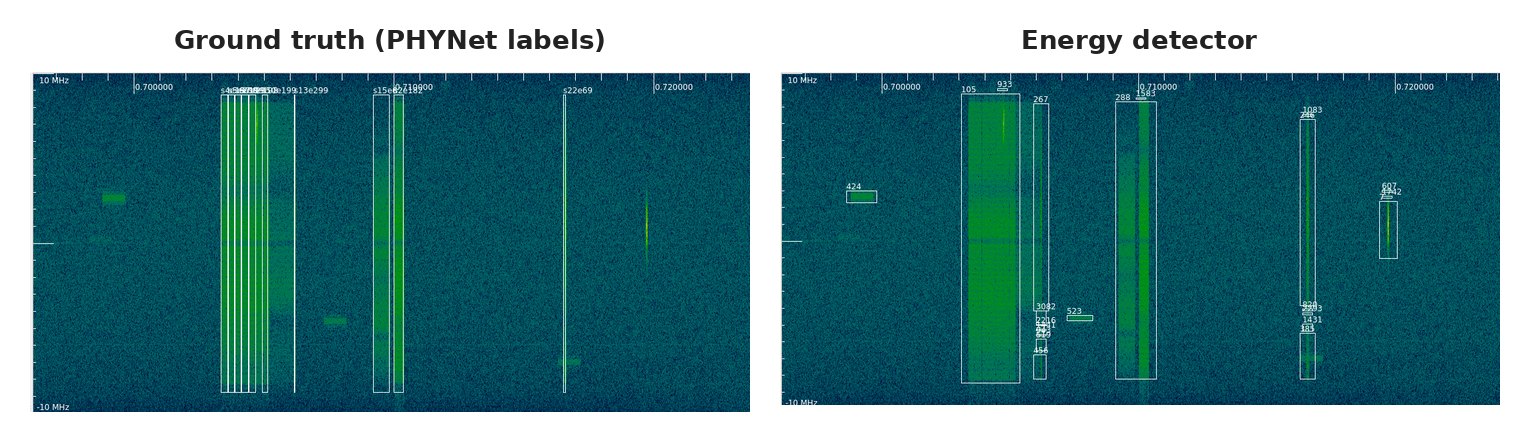
The same over-the-air capture labelled two ways: PHYNet's ground truth marks each transmission, while an energy detector merges some bursts and fragments others

PHYNet: A Gold-Standard Labelled PHY-Layer Dataset

2024 – 2026 A multi-purpose labelled PHY-layer dataset that establishes a standard for evaluating PHY-layer algorithms. PHYNet labels transmissions in over-the-air captures using hardware sniffers for Wi-Fi, BLE, Zigbee, LoRa, and 5G alongside GNU Radio transmitters. DetailsHide details

Real-world PHY datasets are typically limited to RF fingerprinting for a single protocol. Hardware timestamps and clock-drift correction align PHYNet’s labels to within approximately 2 µs of the IQ samples, and a successive decoding and cancellation pipeline recovers weaker transmissions. The labels support benchmarking of energy detection, modulation recognition, RF fingerprinting, and source identification, and were used to study how little current spectrum-awareness tools capture of real spectrum activity.

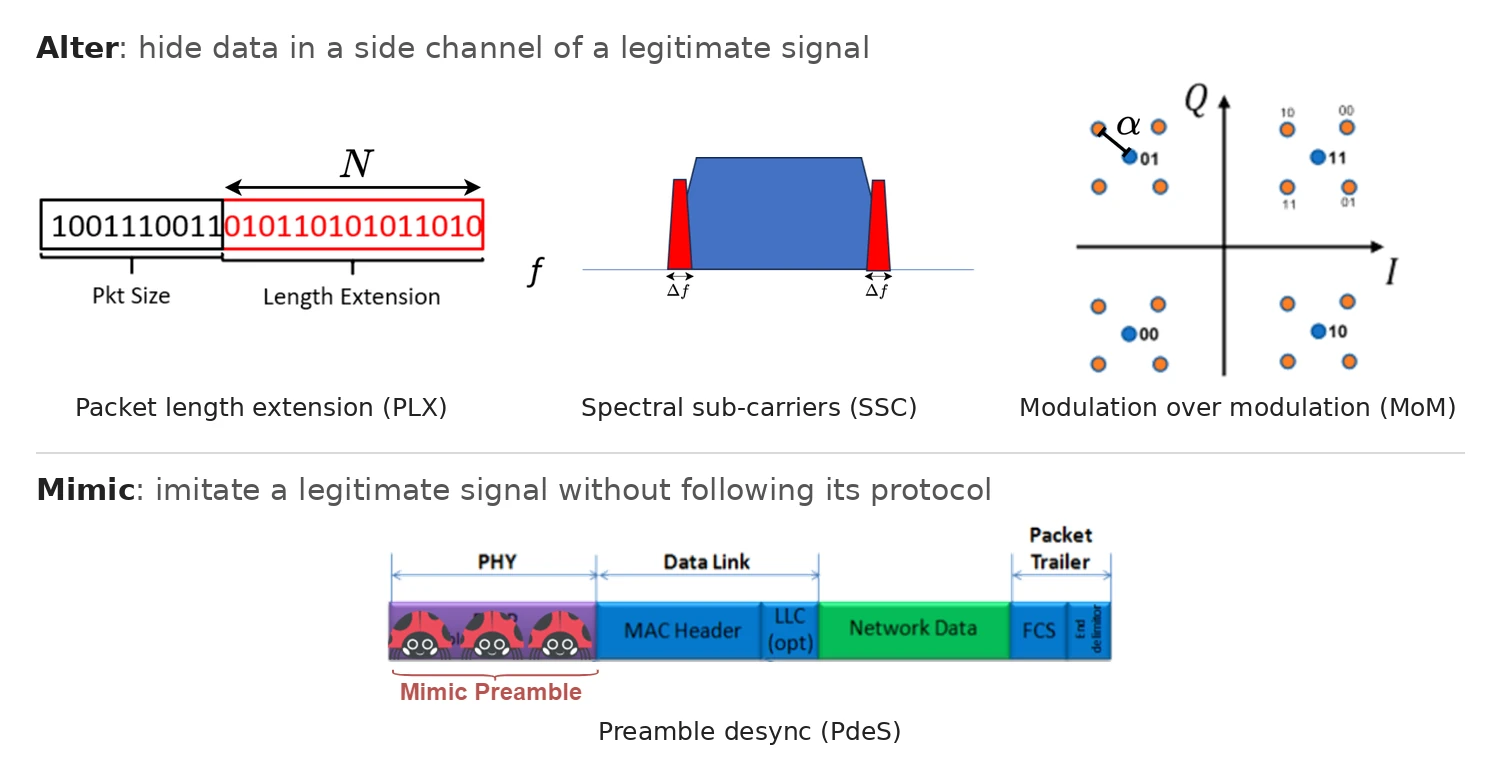
CamoPHYlage techniques. Alter: packet length extension, spectral sub-carriers, and modulation over modulation. Mimic: a desynchronized preamble.

CamoPHYlage: Hiding Signals in Plain Sight

2024 – 2026 Adversarial mimicking techniques that evade PHY-layer detectors and enable covert communication in plain sight. CamoPHYlage studies covert transmissions whose energy distribution in time and frequency resembles ordinary traffic. DetailsHide details

Security monitoring rarely extends to the physical layer. Alter techniques hide data in a side channel of a legitimate signal through packet length extension, spectral sub-carriers, or modulation over modulation. Mimic techniques synthesize a non-protocol-compliant signal with a target’s PHY signature, found through Bayesian optimization and neural parameter estimation from spectrograms. Measured by Fréchet Inception Distance, both are far closer to normal traffic than conventional low-probability-of-intercept signals, and a battery-powered SDR prototype reached a receiver approximately 300 m away.

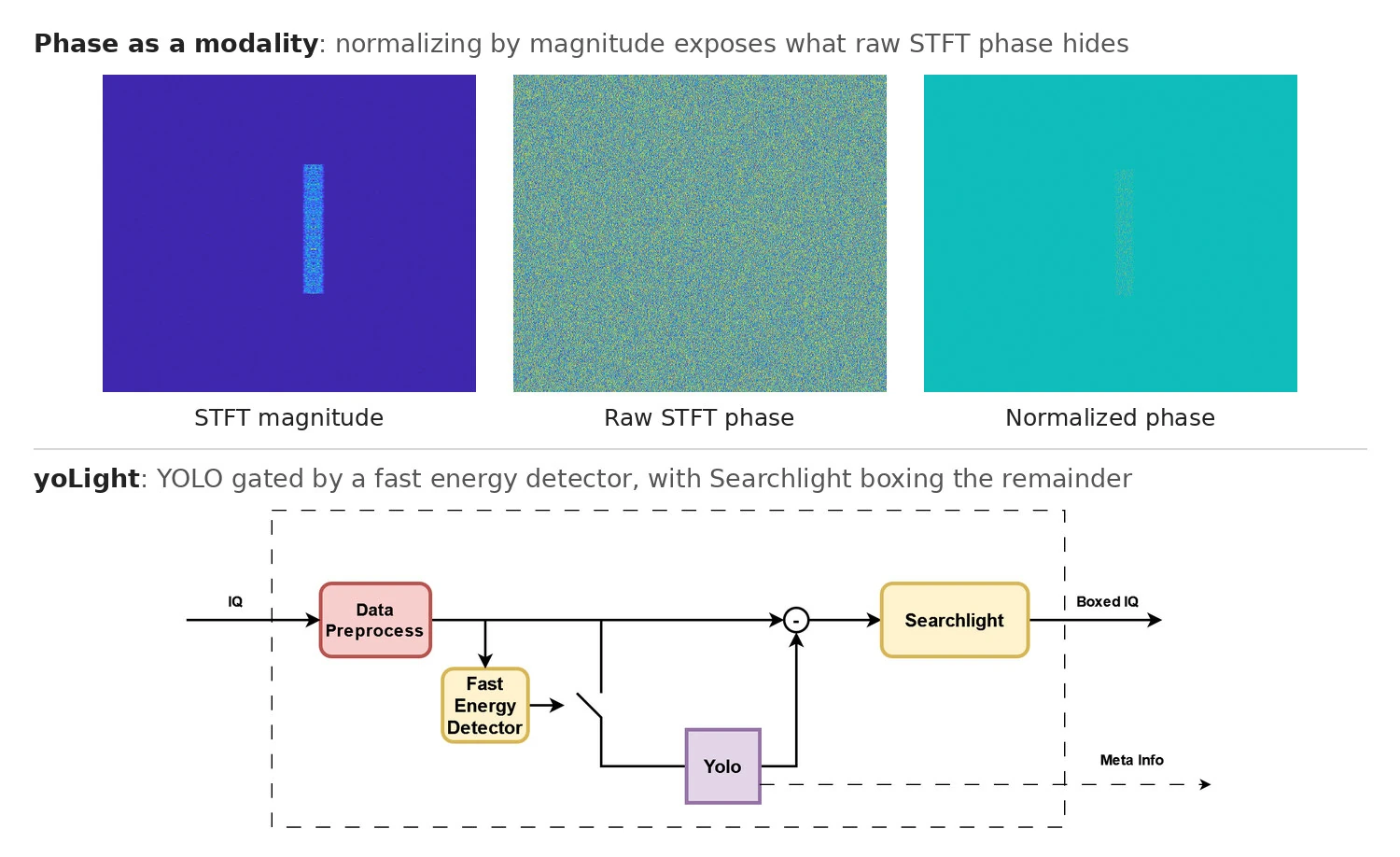
Top: the same signal shown as an STFT magnitude, raw STFT phase, and normalized phase. Bottom: the yoLight pipeline, in which a fast energy detector gates YOLO and Searchlight boxes the remainder.

rfYOLO: Phase as a Modality for Signal Detection

2022 – 2024 · IARPA-funded A phase transform that improves PHY-layer signal characterisation using YOLO networks. rfYOLO studies phase as an additional modality, since spectrogram-based detectors discard phase information. DetailsHide details

On a mixed dataset, YOLO on STFT magnitude alone identified CPFSK, FSK, and GFSK at 90–96% and PSK2 at 83%, likely because their spectral shapes differ, but could not separate QAM orders (26–32%). The transform removes the deterministic phase term introduced by the STFT and weights the result by magnitude. Raw STFT phase proved ineffective as a network input, while the corrected phase performed better. The surrounding pipeline, yoLight, uses a fast energy detector to gate YOLO inference, subtracts YOLO’s detections from the stream, and passes the remainder to the Searchlight energy detector to produce boxed IQ and signal metadata.

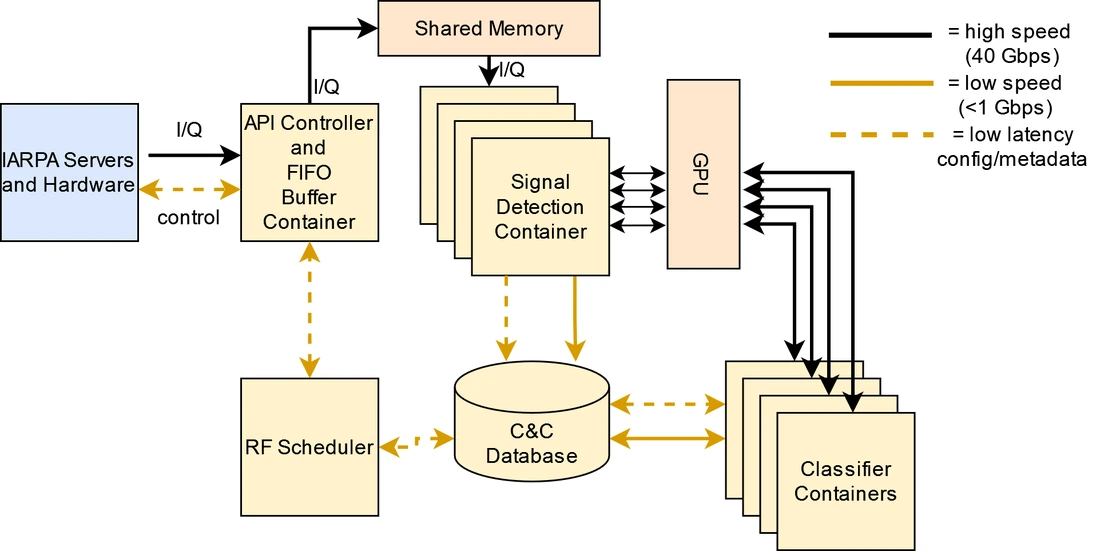
Nomad architecture: an API controller and FIFO buffer feed I/Q samples through shared memory to signal-detection and classifier containers that share a GPU, coordinated by a command-and-control database and an RF scheduler

Nomad: Providing Insights into the Spectrum Environment

2022 – 2024 · IARPA-funded · ACM MobiCom 2024 A high-throughput spectrum sensing system with a line rate of 40 Gbit/s. I architected its pipeline, built from containerized microservices for buffering, signal detection, and classification. DetailsHide details

The microservices exchange samples through a copy-efficient shared-memory interface and coordinate through a Redis-based in-memory database.

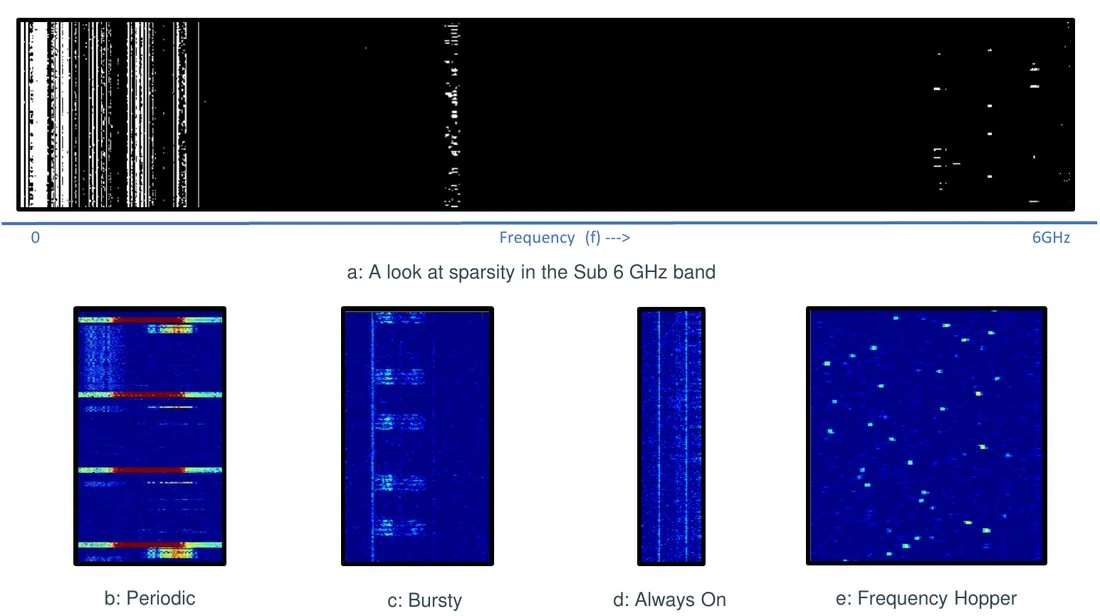
Signals in the wild: sparse occupancy across the sub-6 GHz band, and periodic, bursty, always-on, and frequency-hopping signals

SpecSense: Learning-Based Wideband Spectrum Sensing

Summer 2022 · JASR Systems Blind detection and tracking of low-probability-of-intercept signals, developed during a research internship. A statistical approach to wideband spectrum sensing learns each signal’s arrival process from heavily undersampled observations. DetailsHide details

with Raghav Subbaraman

With only 1–5% real-time coverage, the resulting model directs a small number of radios. An optimal cooperative scheduling algorithm extends the approach to multiple receivers, improving prediction over the state of the art.

Earlier Research 2019 – 2022

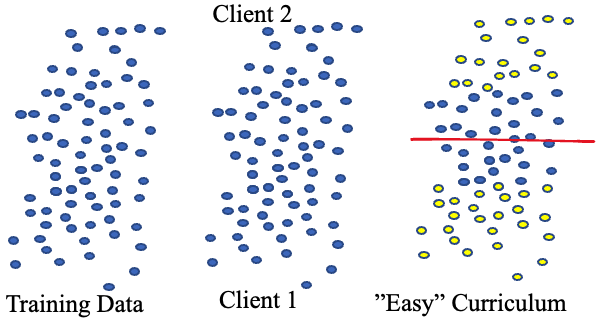
Illustration of training data split across two clients and an easy-first curriculum

When Do Curricula Work in Federated Learning?

2022 · ICCV 2023 A study of curriculum learning in a federated context, showing that curricula can significantly improve the convergence time of training. Ordered learning substantially offsets the effect of non-IID data, and clients with more divergent distributions benefit more. DetailsHide details

with Saeed Vahidian, Mubarak Shah, Bill Lin, and others

Curriculum learning orders training data from easy to hard, while in federated learning each client trains on its own skewed slice of the data. A convergence analysis models curriculum training as local SGD with locally biased gradients, and a curriculum over clients, introduced from easy to hard, further improves performance.

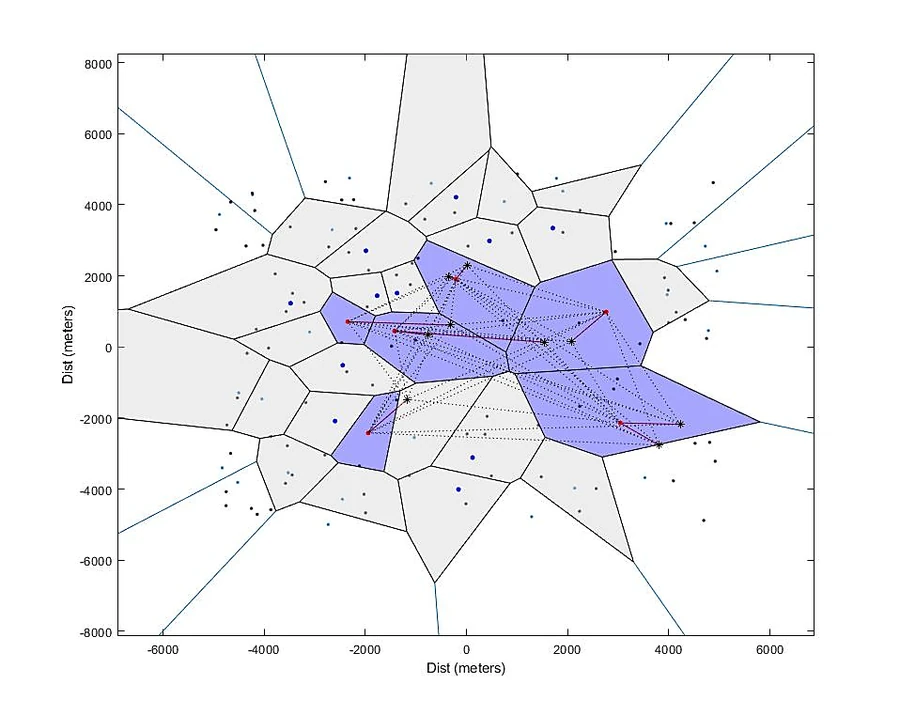
Multi-cell MIMO system model: base stations in a coordinated cluster serving mission-critical users

LDPC Coding for Mission-Critical Multi-Cell MIMO in 5G

2019 – 2020 · Télécom Paris & IIT Indore A latency-reliability trade-off in LDPC code selection for video traffic over multi-cell MIMO in 5G. Real-time traffic such as H.264 video cannot wait to fill large blocks and pays a reliability penalty. DetailsHide details

This work began as a research internship at Télécom Paris and continued as my B.Tech. thesis at IIT Indore with Dr. Prabhat Kumar Upadhyay. I characterized the 5G NR LDPC base graphs across packet sizes. Accumulating packets before encoding recovers much of the lost reliability at the cost of delay, and I mapped the resulting trade-off for video over a multi-cell MIMO system.

Selected Graduate Projects UC San Diego

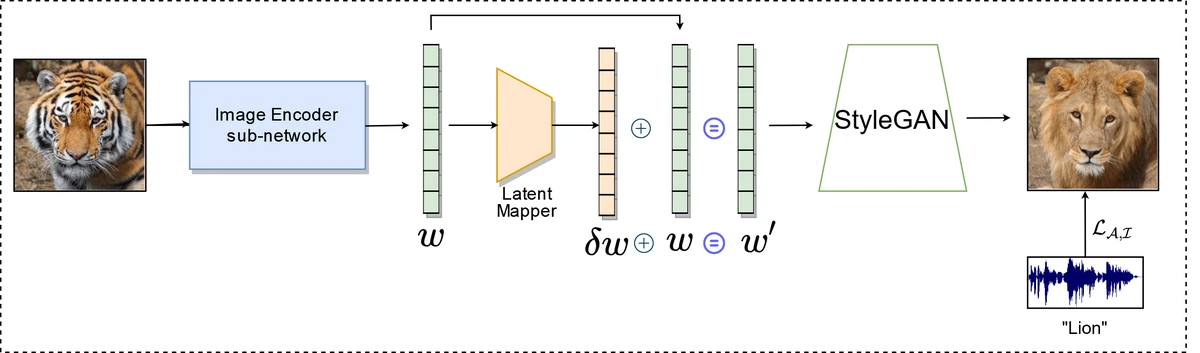
Audio-StyleCLIP architecture: an image encoder and latent mapper edit a StyleGAN latent under a loss computed against a spoken prompt

Audio-StyleCLIP

ECE 285: Deep Generative Models · with Preyaa Patel and Varun Pawar

Extended StyleCLIP with AudioCLIP, adapted for spoken prompts, to perform style transfer onto an image using an audio styling input.

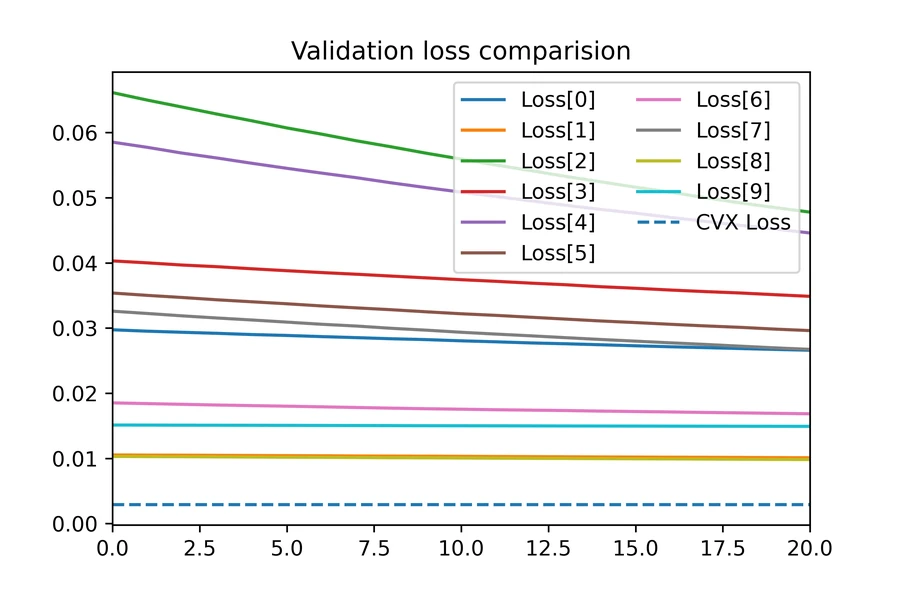
Validation loss of SGD-trained networks compared with the convex-program optimum

Convexifying Neural Networks

Implemented the exact convex reformulation of two-layer ReLU network training, whose solution yields a globally optimal network, and compared it against networks trained with SGD.

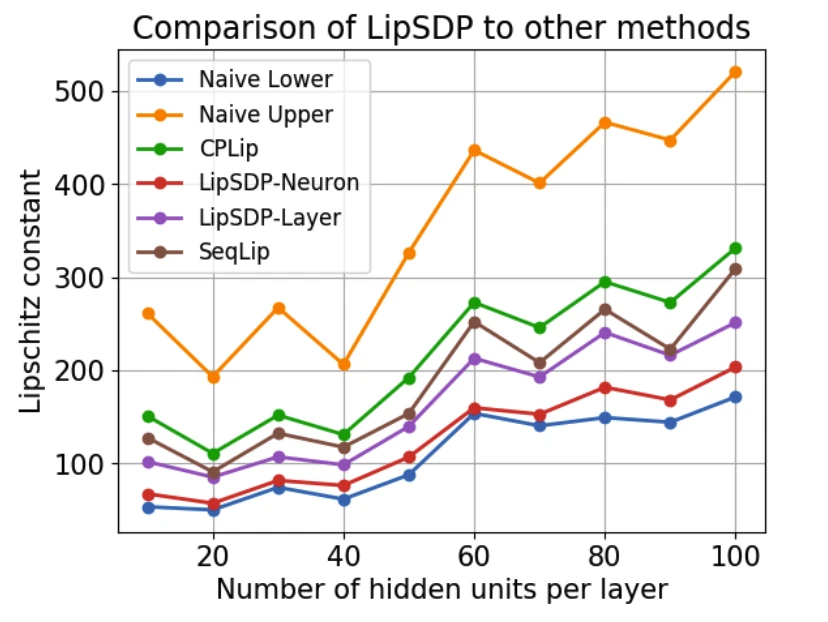
Lipschitz-constant estimates from LipSDP compared with other estimation methods as layer width grows

Training Robust Neural Networks

ECE 285: Sum-of-Squares Optimization · with Gaurav Singh and Varun Pawar

Implemented Lipschitz-constant based regularization for training robust neural networks and compared performance against L2 and other baseline techniques.

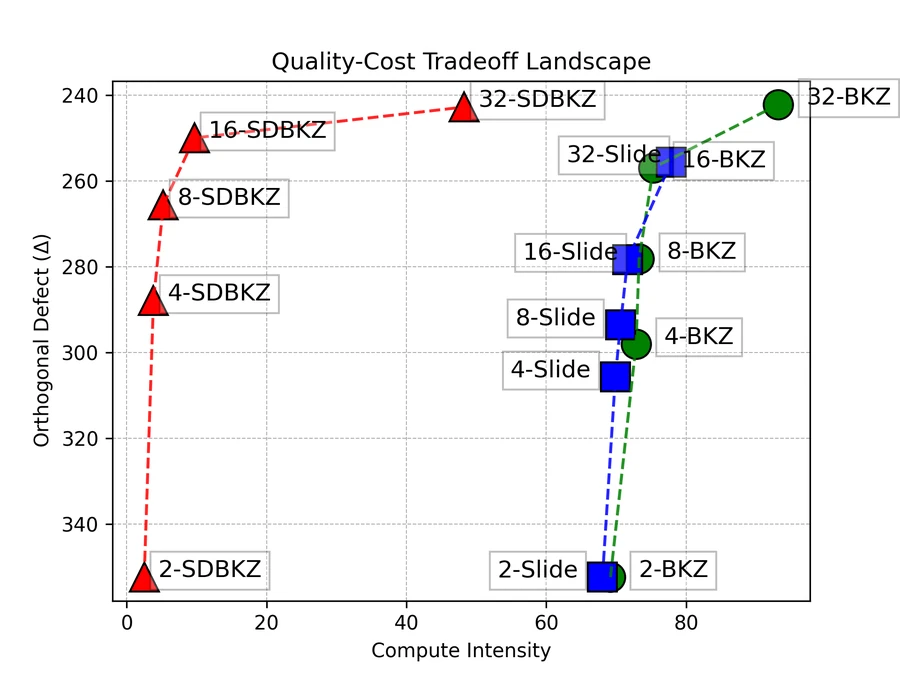
Quality versus compute trade-off of LLL, BKZ, Slide, and self-dual BKZ lattice reduction

Lattice Basis Reduction in Practice

Evaluated the LLL, BKZ, Slide, and self-dual BKZ reduction algorithms on commodity hardware, studying the trade-off between basis quality and CPU time and how both scale with lattice dimension.